

How to Choose the Right Pharma Filling Machine

Choosing the right Pharma Filling Machine is a process decision, not merely an equipment purchase. A vial line may look impressive under bright factory lights, yet fail when powders cling to the hopper or stopper placement drifts. The machine must match the product, container, filling range, cleanroom design, and validation strategy.

IQVIA’s Global Use of Medicines 2024 report projects global medicine spending will approach $2.3 trillion by 2028. That growth increases pressure on manufacturers to improve speed, flexibility, and supply reliability. FDA process-validation guidance and ISPE’s Baseline Guide Volume 3 both emphasize process understanding, contamination control, and documented performance. These principles should shape every specification.

Quality starts earlier.

Former FDA Center for Drug Evaluation and Research director Dr. Janet Woodcock stated, “Quality cannot be tested into products; it should be built-in or should be by design.” Her comment applies directly to filling equipment. A machine with servo-controlled dosing, restricted-access barriers, automated reject tracking, and cleanable product-contact parts can support that design philosophy. However, automation alone does not guarantee quality. Operator training, environmental monitoring, changeover time, and maintenance access still matter. I may be too optimistic about advanced sensors; poor procedures can defeat excellent hardware.

This guide will examine dosing accuracy, aseptic capability, container compatibility, output requirements, validation evidence, and total ownership cost. It will also question attractive specifications that lack meaningful factory acceptance data. The best Pharma Filling Machine is not always the fastest model. It is the one that performs consistently, can be validated, and remains practical when production conditions change.
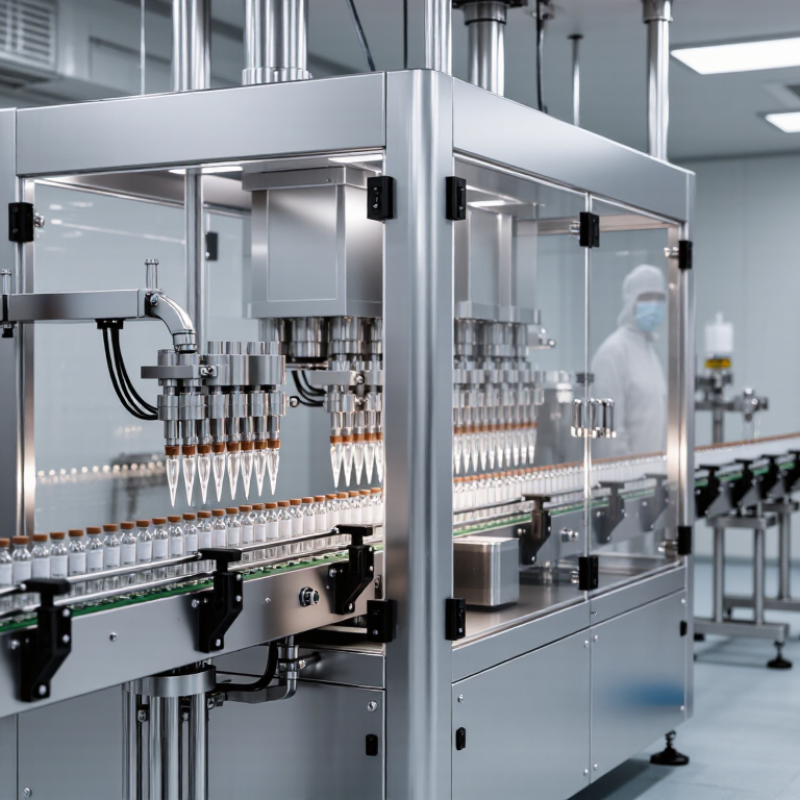
How to Choose the Right Pharma Filling Machine

Define the Product and Filling Requirements

Choosing the right pharma filling machine starts with the product, not the equipment catalogue.

Define viscosity, density, foaming, particulates, sterility, and sensitivity to oxygen or light. A 1 mL solution behaves differently from a suspension in a 100 mL bottle. Container material, neck size, closure type, and fill-volume tolerance also matter. Small differences can change dosing accuracy and cleaning performance.

The IQVIA Institute’s Global Use of Medicines 2024 report projects worldwide medicine spending will approach $2.3 trillion by 2028. That growth increases pressure for flexible, reliable filling systems. The WHO Global Vaccine Market Report recorded approximately 13.5 billion vaccine doses supplied in 2021, showing the scale of modern sterile production.

However, high output is not the only target. FDA process-validation guidance stresses control across the full process lifecycle. A machine must therefore match batch size, filling speed, environmental controls, and validation strategy. I would not choose speed before understanding product behavior. That mistake is common, and expensive.

Tips: Record the product temperature during filling. Measure viscosity at production conditions. Test the smallest and largest planned fill volumes. Ask for documented accuracy results using your actual container and formulation. A practical factory trial often reveals issues that specifications hide. Include changeover time, cleaning access, and rejected-container handling in the evaluation. These details seem minor. They rarely are.

Compare Filling Machine Types and Operating Principles

Choosing a pharmaceutical filling machine starts with the product, not the equipment brochure. Viscosity, foaming, particle sensitivity, container size, and dose tolerance shape the decision. In production audits, I have seen small viscosity changes disturb fill accuracy. The “best” machine can fail when the process is poorly characterized. That is easy to miss.

Piston fillers measure volume through a calibrated piston stroke. They suit viscous liquids, creams, and suspensions, but shear and cleaning deserve attention. Peristaltic fillers move liquid through disposable or cleanable tubing by rotating rollers. The product contacts the tubing only, reducing cross-contamination concerns and simplifying changeover. However, tubing fatigue may affect accuracy during long runs. Time-pressure fillers use compressed air or gas to push liquid into containers. They handle low to medium viscosities well, though pressure stability becomes critical.

Gravity fillers rely on liquid head pressure and work best with free-flowing products. They are mechanically simple, yet small differences in foaming can alter fill levels. For sterile applications, filling design must match closed processing, environmental controls, and validated cleaning or sterilization methods. Check repeatability at the slowest and fastest planned speeds. Review hold-up volume, tubing compatibility, calibration access, and container closure alignment. I would also challenge the initial test data. One short trial is not enough. A practical comparison uses the real formulation, real containers, and realistic production conditions.

How to Choose the Right Pharma Filling Machine

Comparison of filling machine types and operating principles

How to read this chart: A value of 1 indicates that the machine type is generally suitable for the product category when correctly configured. Gravity and overflow fillers are mainly used for free-flowing liquids, piston fillers handle viscous products through volumetric displacement, peristaltic fillers are commonly selected for low-shear and sterile liquid transfer, and auger fillers are designed for powders.

Assess Accuracy, Speed, Capacity, and Container Compatibility

How to Choose the Right Pharma Filling Machine

Accuracy should be the first practical test. Check the target fill volume, tolerance, and product viscosity under real production conditions. A machine may perform well with water but behave differently with thicker formulations. During trials, measure filled containers at the beginning, middle, and end of a run. Record variation, not just the average result. Small deviations can become costly across thousands of units.

Speed matters, but advertised output can be misleading. Ask whether the stated rate includes stoppages, cleaning, adjustments, and container changes. A slower machine with stable dosing may outperform a faster model that requires frequent intervention. Review the filling range and confirm that accuracy remains acceptable at both low and high speeds. Operators should also be able to adjust settings without excessive downtime. This is where many evaluations become too optimistic.

Capacity must match current demand and realistic growth. Consider hopper volume, pump capability, line integration, and available floor space. Oversizing increases cost and may complicate operation. Container compatibility requires equal attention. Test different diameters, heights, materials, neck finishes, and closure systems before approval. Check whether containers remain steady beneath the nozzles. Confirm that contact parts are suitable for the formulation and easy to inspect. One overlooked container variation can disrupt an otherwise sound process. Experienced teams document these failures instead of hiding them, because the next changeover may expose the same weakness.

Check Material Safety, Cleaning, and Regulatory Compliance

How to Choose the Right Pharma Filling Machine

Material safety should guide the selection from the beginning. Product-contact parts commonly use 316L stainless steel or other documented pharmaceutical-grade materials. Ask for material certificates, surface-finish data, and gasket compatibility records. A visually clean machine may still release unwanted particles or chemical residues. Request extractables and leachables information when the formulation requires it. Consider temperature, pressure, viscosity, and repeated exposure to cleaning agents.

Cleaning performance needs practical testing, not attractive brochures. Look for smooth welds, accessible filling paths, and minimal dead legs where residue can collect. Clean-in-place systems should provide consistent flow, coverage, and documented parameters. Some machines also require partial disassembly. That detail matters. Inspectors may expect validated cleaning procedures, rinse samples, swab locations, and defined acceptance limits. Operators should confirm whether tools are needed and how long routine cleaning actually takes.

Regulatory compliance depends on the intended market and product category. Review documentation for design qualification, installation qualification, operational qualification, and performance qualification. Electronic records should support access control, audit trails, and reliable data retention when applicable. Ask how calibration, maintenance, deviations, and changes are controlled. A checklist can miss what operators notice during a late shift. Trial runs should include realistic containers, fill volumes, and cleaning cycles. The best choice is not always the fastest machine; it is the one that can repeatedly protect the product, document its condition, and remain clean under real production pressure.

Evaluate Automation, Maintenance, Cost, and Supplier Support

Choosing the right pharma filling machine requires more than comparing output rates. Automation should match your batch size, product viscosity, container format, and available staff. A fully automated line may reduce manual handling, but it can create difficult troubleshooting tasks. Watch the operator during a trial. Can they adjust settings without confusion? Does the system record fill weights, alarms, and rejected containers clearly? A 100-vial test run can reveal problems that a sales demonstration hides.

Maintenance directly affects production cost. Review cleaning access, changeover time, lubrication points, and the availability of standard spare parts. Ask how often pumps, seals, and filling needles require replacement. Cheap equipment can become expensive. Energy use, validation work, training, and unplanned downtime also belong in the calculation. One weak assumption is treating maintenance as a technical issue only. It is also a scheduling and budgeting issue. Leave room for mistakes, because real production rarely follows the ideal plan.

Supplier support should be tested before purchase, not trusted after installation. Request clear details about factory acceptance testing, site installation, operator training, software updates, and emergency response times. Reliable suppliers provide practical manuals, traceable documentation, and qualified service personnel. Ask whether spare parts can arrive quickly in your region. Support promises are not enough. Contact existing users when possible, and ask what happened during their first breakdown. Their answers may be more useful than polished specifications.

How to Choose the Right Pharma Filling Machine - Evaluate Automation, Maintenance, Cost, and Supplier Support
Machine Category Typical Application Typical Output Range Automation Level Typical Dosing Accuracy Maintenance Requirements Indicative Capital Cost Supplier Support Requirements Best Fit Overall Suitability Score
Manual or Benchtop Filling Machine Small batches, clinical trials, formulation development, and low-volume liquid products. Approximately 5–30 containers per minute, depending on operator speed and container format. Low; loading, container handling, and often stop/start operation are performed manually. Typically about ±1% to ±2% with a suitable pump, product, and calibrated setup. Low mechanical complexity. Routine cleaning, hose replacement, lubrication where applicable, and periodic calibration are normally required. Approximately USD 5,000–30,000 Basic commissioning, operating training, spare seals, tubing, and access to calibration support are usually sufficient. Start-up operations, laboratories, pilot production, and products with frequent changeovers. 3.2 / 5
Semi-Automatic Piston or Peristaltic Filler Liquid and semi-viscous pharmaceutical products filled into bottles, vials, or other small containers. Approximately 10–60 containers per minute, depending on the number of filling heads and product characteristics. Medium; dosing is automated, while container loading and unloading may remain manual. Typically about ±0.5% to ±1%, subject to viscosity, pump selection, and process control. Moderate. Product-contact parts require cleaning and inspection; seals, tubing, and pump components are wear items. Approximately USD 20,000–100,000 Supplier should provide installation qualification support, cleaning guidance, operator training, spare-part lists, and remote troubleshooting. Growing manufacturers needing better repeatability without investing in a complete high-speed line. 4.0 / 5
Automatic Inline Volumetric Filler Routine bottle filling for oral liquids, topical products, and other non-sterile pharmaceutical formulations. Approximately 30–150 containers per minute, depending on fill volume, container size, and number of filling heads. High; container indexing, filling, and basic line controls are automated. Typically about ±0.5% to ±1% when the product and machine are properly matched. Moderate to high. Scheduled cleaning, pump and valve inspection, sensor checks, lubrication, and format-part management are needed. Approximately USD 80,000–250,000 Supplier should offer factory acceptance testing, site acceptance testing, documentation, validation assistance, training, and local or rapid-response service. Medium- to high-volume production with stable products and standardized container formats. 4.4 / 5
Overflow Filler Low- to medium-viscosity liquids where a consistent visual fill level is important, such as solutions and some oral liquids. Approximately 30–120 containers per minute, depending on container geometry and filling configuration. Medium to high; filling can be automated, but upstream and downstream handling may vary. Excellent fill-level consistency; actual mass accuracy depends on container uniformity and product properties. Moderate. Nozzles, seals, hoses, and product-contact paths require regular cleaning and inspection. Approximately USD 60,000–200,000 Supplier should provide nozzle setup guidance, change-part support, cleaning validation documentation, and process troubleshooting. Clear or free-flowing liquids packaged in containers where a uniform liquid level improves presentation. 4.1 / 5
Rotary High-Speed Filler Large-scale production of liquid pharmaceutical products with established formulations and high annual demand. Approximately 100–600 containers per minute, depending on machine size, fill volume, and line integration. Very high; filling, indexing, reject handling, and electronic monitoring are typically integrated. Often about ±0.5% or better under controlled operating conditions and with validated dosing systems. High. Planned preventive maintenance, format-part control, servo and sensor checks, lubrication, and trained technicians are required. Approximately USD 250,000–1,000,000 or more Comprehensive lifecycle support is essential, including validation documentation, spare-parts planning, technician training, software support, and rapid service response. High-volume facilities where labor reduction, throughput, and equipment utilization justify the investment. 4.3 / 5
Aseptic Vial or Ampoule Filling Line Sterile pharmaceutical products requiring controlled filling, stoppering or sealing, and integration with cleanroom processes. Approximately 30–400 containers per minute, depending on vial or ampoule size, filling technology, and line configuration. Very high; automated filling is integrated with sterilization, restricted-access technology, inspection, and environmental monitoring where required. Commonly targeted at about ±1% or better, but the validated specification depends on the product, container, and regulatory requirements. Very high. Preventive maintenance, aseptic cleaning, filter management, calibration, environmental monitoring, and validated changeover procedures are required. Approximately USD 500,000–3,000,000 or more Supplier must provide extensive qualification and validation documentation, aseptic-process expertise, operator training, spare-parts planning, software support, and qualified service personnel. Sterile manufacturing sites with strong quality systems, qualified personnel, and sufficient cleanroom infrastructure. 4.6 / 5
Planning note: The output, accuracy, maintenance, and cost figures are general industry planning ranges rather than quotations. Actual performance and total cost of ownership depend on product viscosity, foaming behavior, fill volume, container type, cleanroom classification, validation scope, changeover frequency, local labor rates, and required line integration.
Go to Top